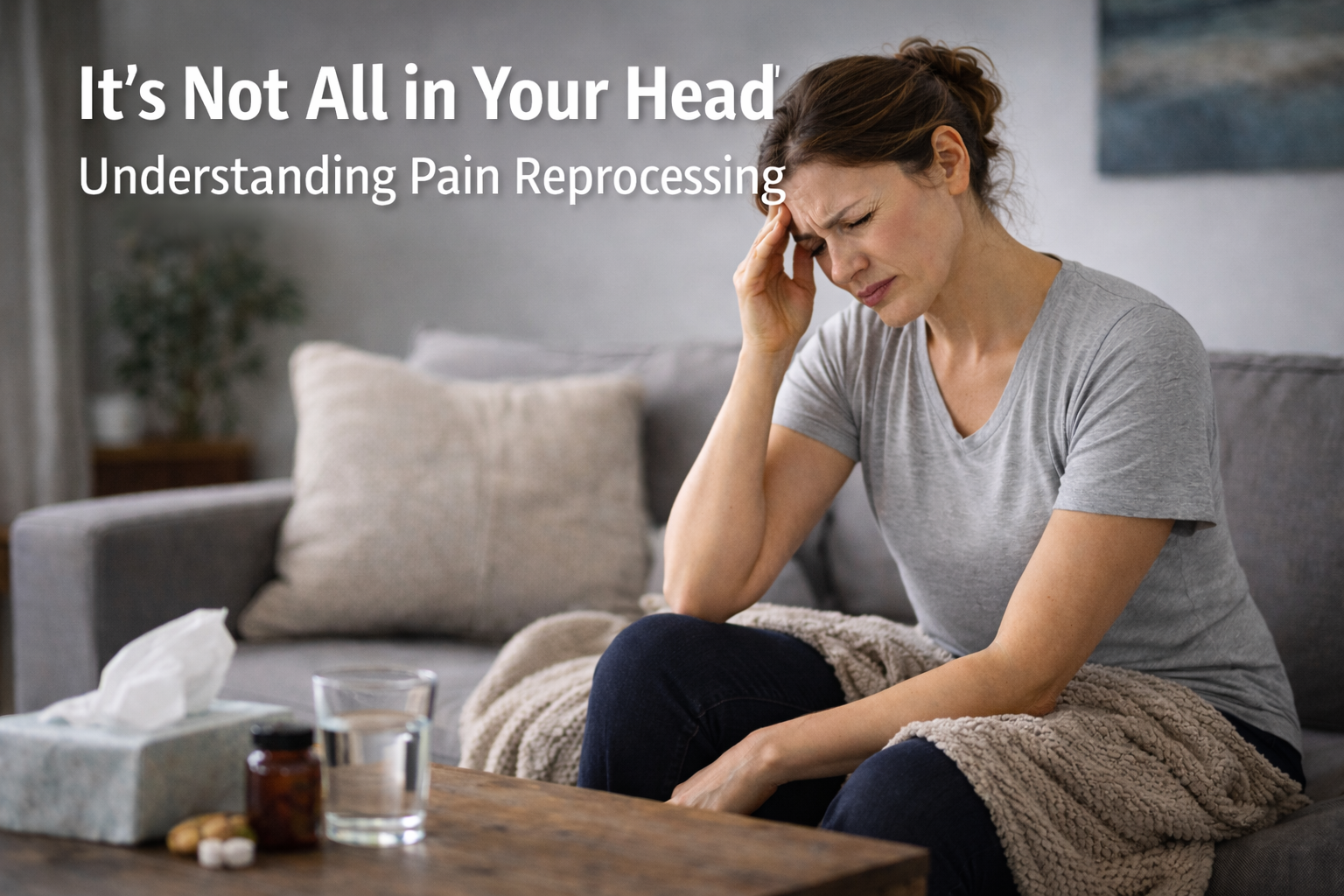
One of the most common and understandable reactions people have when they encounter Pain Reprocessing Therapy is the feeling that they’re being told, “it’s all just in your head.” Even when that isn’t what’s being said, it’s often what’s heard. And given how real, persistent, and disruptive chronic pain can be, that reaction makes complete sense. Pain is felt in the body. It affects movement, energy, sleep, work, relationships, and identity. So any explanation that highlights the brain can easily sound like minimization rather than support.
What’s often missing in that moment is shared language for how the brain and body actually relate to each other.
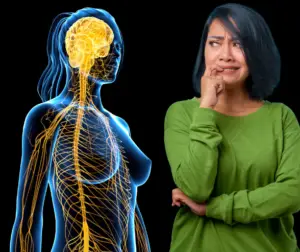
The brain is not separate from the body, nor does it sit above it as some detached command center. It is part of the body, embedded within it, continuously exchanging information with muscles, organs, hormones, immune responses, and sensory nerves. Experiences like pain, tightness, pressure, fatigue, dizziness, or breathlessness are not simple readouts of tissue condition. They emerge from how the system as a whole interprets signals, context, past experience, and perceived safety or threat.
This becomes especially relevant with chronic pain. Tissues send signals, but pain itself is an experience generated within the nervous system. That’s why pain can persist long after an injury has healed, why imaging often fails to explain symptom intensity, and why the same structural findings can feel completely different from one person to another. None of this makes the pain less real. It helps explain why its persistence doesn’t necessarily mean ongoing damage.
Over time, repeated stress, fear, uncertainty, medical experiences, or unresolved pain episodes can shape the nervous system toward heightened alertness. When that happens, symptoms may continue even when the original trigger is no longer present. This ongoing state can influence muscle tension, circulation, hormone regulation, immune signaling, and inflammatory processes. These changes are physical, measurable, and embodied. They are not imagined, exaggerated, or psychological in the dismissive sense of the word.
It’s also important to recognize that this is never a one-way process. The body is constantly informing the brain through immune activity, hormonal shifts, gut signaling, and sensory input. Pain, stress, and inflammation often develop through reinforcing feedback loops between brain and body rather than from a single identifiable cause.
This is where many people understandably struggle with the phrase “the brain creates pain to protect you.” When pain is constant or overwhelming, it doesn’t feel protective at all. It feels like the threat itself. It limits life, narrows choices, and becomes the very thing someone wants relief from. So hearing pain described as protective can feel abstract, invalidating, or simply disconnected from lived experience.
What tends to land more gently is a shift in emphasis. Rather than saying the brain is protecting you from pain or from your body, it’s more accurate to say that the nervous system is responding to perceived danger based on patterns it has learned over time — not necessarily based on what is happening right now.
The nervous system is oriented toward survival, not comfort or precision. It continuously scans for risk and tries to predict what might cause harm. To do that, it draws on memory, past experiences, associations, and expectations. If certain sensations, movements, emotions, or situations were once linked with injury, overwhelm, or loss of control, similar signals can later be flagged as dangerous, even in the absence of current tissue damage.
From this perspective, pain and other symptoms are not mistakes or failures. They are alarm signals. Much like anxiety, nausea, dizziness, muscle tightness, or fatigue, pain can function as a signal to slow down, stop, or pay attention. In chronic conditions, the challenge is not that the alarm exists, but that it no longer reflects present-moment reality. The system has learned to stay vigilant.
This can be easier to grasp through everyday examples. A smoke alarm that goes off every time you make toast isn’t broken in the traditional sense. It’s doing exactly what it was designed to do: detect potential danger and alert early. The problem is sensitivity, not intent. The alarm feels like the problem, but removing it wouldn’t make the kitchen safer. What’s needed is recalibration.
Something similar can happen in chronic pain and other persistent symptoms. Through injury, stress, fear, or repeated flare-ups, the nervous system may learn that certain signals are risky. Over time, it may respond preemptively. From the system’s point of view, this is logical: better to warn too early than too late. From the person’s point of view, it can feel exhausting, confusing, and deeply unfair.
This is also why people often say, “There’s nothing in my life I need protection from.” And in many cases, that’s true externally. The protection at play here isn’t about current danger in the environment. It’s about internal predictions — attempts to prevent overload, uncertainty, emotional threat, loss of control, or the recurrence of past pain. In some cases, the system is even trying to prevent more pain by limiting movement, increasing vigilance, or producing symptoms early.
Over time, this can turn into a painful paradox: the system tries to protect against pain by creating more pain. The original protective strategy becomes outdated, but it doesn’t stop automatically. Not because anything is wrong with the person, but because learned patterns don’t update on their own.
For many people, a more accurate and resonant way to describe this is not “your brain creates pain to protect you,” but something closer to:
the nervous system learned to associate certain signals with danger, and it’s responding as if that danger is still present.
Pain Reprocessing Therapy doesn’t suggest that symptoms are “just in the head.” It starts from the understanding that the brain–body system can learn patterns that sustain pain and stress — and that those patterns can also change. Through repeated experiences of safety, accurate information, and shifts in attention, the system can update its predictions. As perceived danger decreases, the alarm no longer needs to stay on high alert.
In that sense, this work isn’t about fighting pain, fixing yourself, or convincing the brain it’s wrong. It’s about helping an overprotective system realize that it is safe enough to stand down — gently, gradually, and without blame.